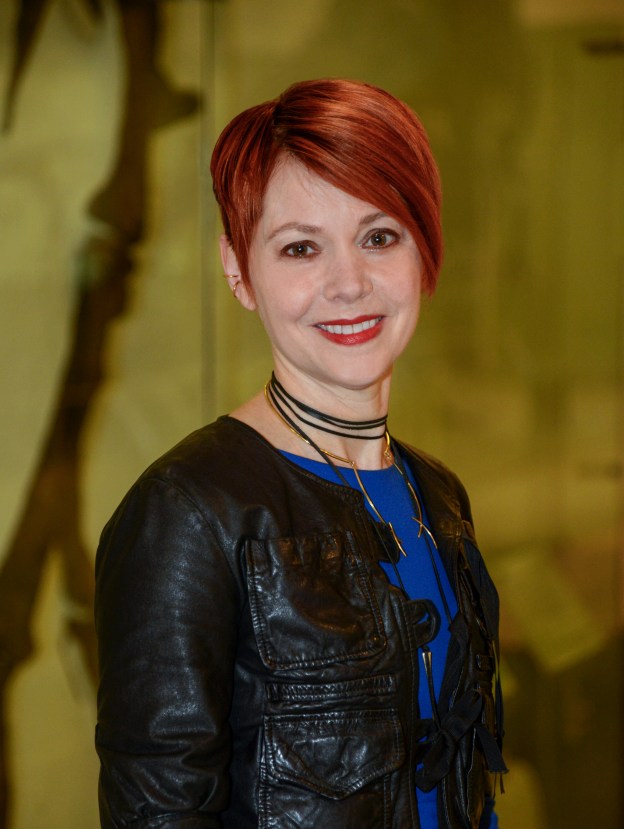
I am the Senior Educational Research Director at the American Museum of Natural History in New York City. My most recent book, Preparing Science Teachers through Practice-Based Teacher Education (Harvard Education Press, 2020), co-edited with David Stroupe and Scott McDonald, explores how new teachers learn ambitious science teaching through focusing upon classroom practices. I’m also the author of Empowered Educators in Finland: How High-Performing Systems Shape Teaching Quality (Wiley, 2017), with Raisa Ahtiainen and Pasi Sahlberg, and a co-author of Empowered Educators: How high-performing systems shape teaching quality around the world (Wiley, 2017). I’m a co-editor of Inspiring Teaching: Preparing teachers to succeed in mission-driven schools (Harvard Education Press, 2014). My first book, based on my dissertation research, explored the role of teachers’ vision in their lives and careers: Seeing through teachers’ eyes: Professional ideals and classroom practices (Teachers College Press, 2006)
Prepared as an educational psychologist, my research focuses on teacher education, teacher learning, and STEM teaching and learning. I’m especially interested in what sustains teachers’ and youth visions of themselves and their future and current work, and how those passions and ideals shape and inform personal and professional choices. My work has been supported by a Fulbright U.S. Scholar Award (Norway) and multiple grants from the National Science Foundation. I’ve been engaged in international research on teacher education for almost 20 years, including positions as a Visiting Scholar in The Netherlands, Finland and as a Professor II in Norway at the University of Oslo.
At the American Museum of Natural History, I am responsible for developing a program of research in science teaching and learning in education. For instance, I currently am a co-PI with colleagues, of a ten-year NSF-funded research study follows the trajectories of NYC youth, predominantly students of color, who have been mentored in an immersive science research program (across 24 different informal science institutions in the city). We are now in Year 7 of this longitudinal study. I lead a program of research focusing upon how teachers develop their science teaching practice, in a museum setting, as well as numerous studies of teaching and learning in out-of-school settings.
Background. In the department of Educational Psychology at the Stanford University School of Education, I began my research on teaching with a focus upon individual teachers’ visions. My dissertation explored the relationship between teachers’ images of ideal classroom practice and their learning and beliefs about children, communities and their own careers, and is elaborated in my book, Seeing through teachers’ eyes: Professional ideals and classroom practices (Teachers College Press, 2006). Since then, my work on teacher learning and development has expanded to a broader focus upon teacher education program design and pedagogy and has included examining a variety of teacher education programs from urban residency programs; college or university-based programs, as well as programs that do not easily fit within such categories. As part of that work, I participated in the New York City pathways project, which reinforced the importance of ensuring that vision is grounded in real classrooms, and the value of helping teachers learn and develop a repertoire of powerful core teaching practices. Developing from that examination of teacher education in the context of a large urban setting, my work on the Choosing to Teach project with my colleagues has also made clear that in addition to program vision, and opportunities to enact teaching practice, we also need to prepare teachers for particular kinds of contexts.
My research in teacher learning on vision, practice and context became even more connected in the MAT program at Bard College, where I developed a year-long course focused upon helping new teachers grow their understanding about their teaching context(s), with my colleague BC Craig. Our aim was to help our pre-service student-teachers not only develop and maintain a powerful vision of teaching, but also to gain a set of concrete teaching practices that can be used to inform and adjust their classroom teaching to their particular context. Building on that work on vision, coherence, and practice, I began to conduct research on teacher education programs internationally. This was launched with the support of a Fulbright U.S. Scholar award to conduct research in Norway, where I was hosted by the University of Oslo. Following that, with Kirsti Klette, a colleague at the University of Oslo, I was the co-principal investigator of CATE, a four-year research project examining the nature of teacher education classroom practice in eight programs across five countries (Chile, Cuba, Finland, Norway and the U.S.). I have given recent keynotes on research on teacher education and teacher learning for audiences in Iceland, The Netherlands, Norway and Pakistan.
I can be reached at karenhammerness@gmail.com or on twitter @karenhammerness.
Photo: American Museum of Natural History/Mickens .
 Karen Hammerness